
Melonland
EN
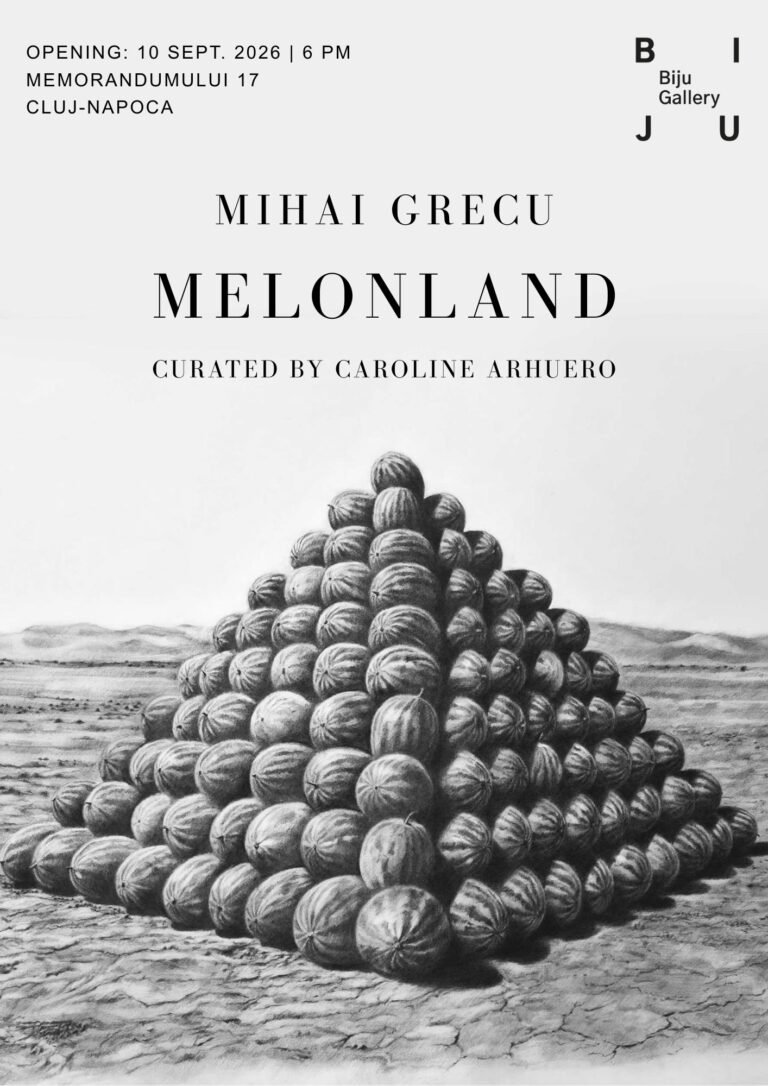
MELONLAND – A Landscape of Abundance
Mihai Grecu is a visual artist and filmmaker. His work sits at the crossroads of several cultural spheres and of the imperial histories that shaped them, which gives it a particular force in a context under constant reassessment: one shaped by political events, by exchange, by climate questions, by wars and by the immediacy of information and disinformation alike.
Working on social subjects through the prism of a symbol, of a recurring meme (an image or idea that circulates and replicates by being copied), the artist offers an almost immediate critical reading of society, one in which subjects overlap and play on the simultaneity of possible understandings. Here the fruit ( an iconography inherited from the still life) becomes an instrument for interrogating history, power, memory and the value of an allegory.
In art history, the still life has served in turn to express abundance, social status, wealth. It also serves to show that the pursuit of wealth is vain: wealth is real, factual, but it offers no escape from passing time, from death.
The genre questions the pleasure of the senses, sensuality, prosperity: a form of gratification bound up with profusion. But once the fruit begins to wither, what is at stake is the corruption of bodies and of matter, and with it the passage of time.
The still life also allows us to question how an image is constructed and how it is perceived. The watermelon, by virtue of its “cylindrical” form, is unstable by nature. Here it underlines what is in motion: time, life, cycles, perception and our relation to the world; and with them the societies caught up in ever more instantaneous flows of images.
Utopia or dystopia?
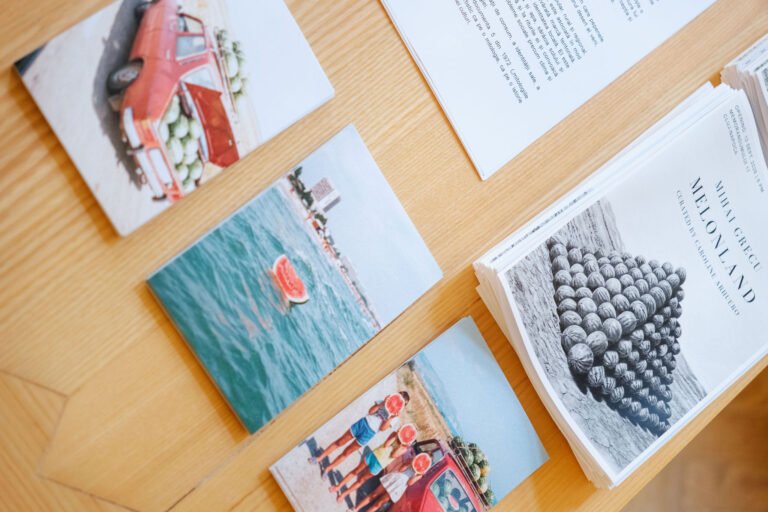
From abundance to shortage, the work points back to a totalitarian Romania in which the watermelon was, for the Romanian population as for Grecu himself, the only dessert of the summer, because nothing else was available.
In Romania, the watermelon is above all a popular, rural and regional symbol rather than a national emblem. The Dăbuleni region in Oltenia is so closely associated with growing it that the lubeniță has become a genuine territorial brand. The watermelon embodies the link between the land, agricultural labour and local identity. It carries a series of powerful symbolic oppositions: drought and water, poor soil and abundance. It stands for a population’s belonging to a culture and to its rites, and it summons today a popular heritage now called into question by societal concerns such as climate and consumption
The subject thus becomes a vector for a satire of consumer society, of its identity, of the politics that govern it, of collective memory and of ecology.
In the term Harald Szeemann coined at documenta 5 in 1972 (“individual mythologies”) Grecu builds his artistic discourse as a mythology, an individual history, while also questioning more broadly the evolution of a culture.
In Grecu’s case, what is brought into particular focus is the exit from the communist era and the interrogation of democracy, as his film NICOLAE (2021) attests. After 1989, the country undertook a difficult transition towards democracy and a market economy. Romania has since undergone profound economic and social transformation, despite persistent societal problems.
This recurring iconography also allows Grecu to layer levels of reading and appropriation for a wider public: the symbol becomes an extended political one, at once forceful and unstable. In Palestine, for instance, the colours of the watermelon echo those of the Palestinian flag; the fruit becomes a political symbol of resistance in the face of prohibition.
Like Warhol, or the Chinese artist Ai Weiwei, the repeated use of a single symbol, of a single “product”, makes it possible to question the various facets and fault lines of a society. The allegory becomes an instrument that both points to and disseminates a message, and that holds a memory of historical stakes. In Grecu’s work, the watermelon is an infinitely reproducible icon with a history recognisable to everyone, even before the artist takes hold of it.
Artificial intelligence now enables the circulation of images produced with generative tools, raising the question of how a society evolves when it is called upon to develop a new perception of the rhythm of History, one in which myths are manufactured faster than the news.
Grecu’s use of AI allows him to produce a multitude of visual variations and fables, disseminating his message with a strong critical immediacy that is at times violent, at times derisory. Chance seems to become the material itself, and the aleatory carries an immediate critical and subversive charge. The artist thereby inscribes his work within a history of political situationism and of the theory of the dérive, in the lineage of Guy Debord.
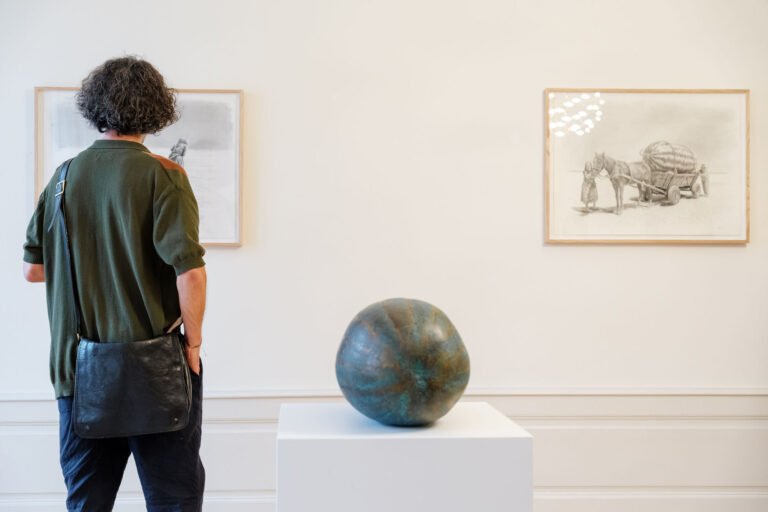
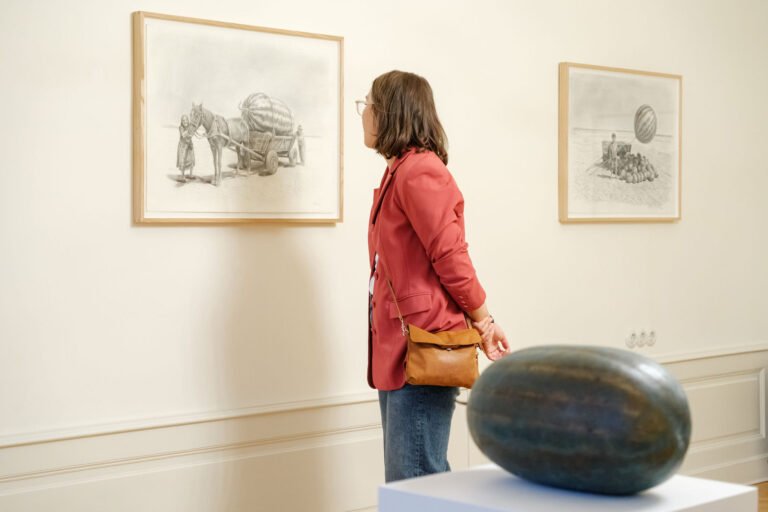
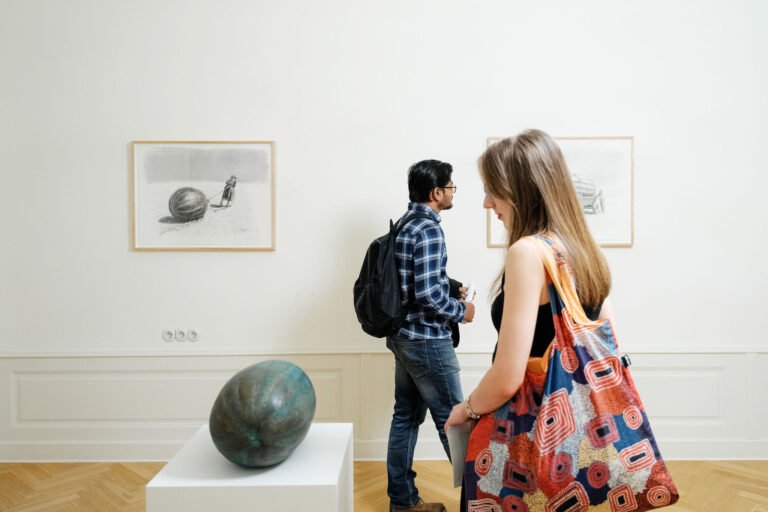
Artificial intelligence blurs the boundary between conception and realisation. The immediacy of execution can, in a sense, approach a form of sketch, leading to the necessity and the desire to return to the “classical” techniques of drawing and sculpture in order to anchor the message and introduce a resistance to the flow of images. In using this tool, Grecu becomes an author of potentialities while preserving the originality of the artistic gesture.
The excellence of Grecu’s drawings and sculptures anchors his subjects in a long, historical reading set against the proliferation of images. The artist thus shifts the temporality of the value of the symbol he represents.
Caroline Arhuero
RO
MELONLAND – A Landscape of Abundance
Mihai Grecu este artist vizual și cineast. Opera sa se situează la intersecția mai multor arii culturale și a moștenirilor imperiale care le-au modelat, ceea ce conferă lucrărilor sale o dimensiune deosebit de puternică într-un context aflat într-o permanentă reevaluare, marcat de evenimente politice, de schimburi, de chestiuni climatice, de războaie și de imediatețea informației și a dezinformării.
Abordând subiecte sociale prin prisma unui simbol, a unei meme recurente (o imagine sau o idee care circulă și se reproduce prin copiere), artistul ne oferă o lectură critică aproape imediată a societății, în care subiectele se suprapun și mizează pe simultaneitatea înțelegerilor. Aici, fructul (o iconografie provenită din genul naturii moarte) devine un instrument prin care se interoghează istoria, puterea, memoria și valoarea unei alegorii.
În istoria artei, natura moartă a fost folosită pentru a exprima abundența, statutul social și bogăția. Ea arată totodată că goana după bogăție este zadarnică: bogăția este reală, factuală, dar nu permite sustragerea de la trecerea timpului, de la moarte.
Genul chestionează plăcerea simțurilor, senzualitatea, prosperitatea și, într-un fel, o formă de desfătare legată de profuziune; dar în clipa în care fructul începe să se ofilească, este vorba despre corupția corpurilor și a materiei și astfel despre trecerea timpului.
Pe de altă parte, natura moartă permite chestionarea modului în care se construiește o imagine și percepția ei. Pepenele verde, datorită formei sale „cilindrice”, este prin natura lui instabil. El vine aici să sublinieze ceea ce este în mișcare: timpul, viața, ciclurile, percepția și relația cu lumea, prin urmare, societățile prinse în fluxuri de imagini tot mai instantanee.
Este vorba, așadar, despre o utopie sau despre o distopie?
De la abundență la penurie, lucrarea trimite la o Românie totalitară în care pepenele verde constituia, pentru populația română, cât și pentru Mihai Grecu, singurul desert al verii, fiindcă nimic altceva nu era disponibil.
În România, pepenele verde este înainte de toate un simbol popular, rural și regional, mai degrabă decât o emblemă națională. Zona Dăbuleni, în Oltenia, este asociată în mod deosebit cu cultivarea lui într-atât încât lubenița a devenit o adevărată marcă teritorială. Pepenele întruchipează legătura dintre pământ, munca agricolă și identitatea locală. El este astfel asociat unei serii de opoziții simbolice puternice: seceta și apa, sărăcia solului și abundența. Simbolizează apartenența unei populații la o cultură și la riturile ei și convoacă astăzi o moștenire populară pusă sub semnul întrebării de probleme sociale precum clima și consumul.
Subiectul devine astfel vectorul unei satire a societății de consum, a identității sale, a politicii care o guvernează, a memoriei colective și a ecologiei.
În termeul propus de Harald Szeemann la documenta 5 din 1972 („mitologiile individuale”), Mihai Grecu își construiește discursul artistic ca pe o mitologie, ca pe o istorie individuală, chestionând totodată, mai larg, evoluția unei culturi.
La Mihai Grecu sunt puse în lumină îndeosebi perioada ieșirii din era comunistă și interogarea democrației așa cum o dovedește filmul său NICOLAE (2021). După 1989, țara începe o tranziție dificilă către democrație și economia de piață. De atunci, România cunoaște o puternică transformare economică și socială, în ciuda unor probleme sociale persistente.
Această iconografie recurentă îi permite lui Mihai Grecu și o suprapunere a nivelurilor de lectură și de apropriere de către un public mai larg, devenind un simbol politic extins, deopotrivă puternic și instabil. În Palestina, de pildă, culorile pepenelui verde le reproduc pe cele ale drapelului palestinian: fructul devine astfel un simbol politic al rezistenței în fața interdicției.
Asemenea lui Warhol sau artistului chinez Ai Weiwei, utilizarea repetată a aceluiași simbol, a aceluiași „produs”, permite chestionarea diferitelor fațete și fisuri ale unei societăți. Alegoria devine un instrument care indică și difuzează un mesaj, dar și o memorie a mizelor istorice. La Mihai Grecu, pepenele verde este o icoană reproductibilă la infinit, cu o istorie recognoscibilă de toată lumea chiar înainte ca artistul să și-o asume.
Inteligența artificială permite de acum difuzarea unor imagini produse cu ajutorul instrumentelor generative și pune sub semnul întrebării evoluția unei societăți chemate să dezvolte o nouă percepție a ritmului Istoriei, acolo unde miturile se fabrică mai repede decât actualitatea.
Recurgerea la IA îi îngăduie lui Mihai Grecu să producă o multitudine de variații vizuale și de fabule, difuzându-și mesajul cu o imediatețe critică puternică, uneori violentă și/sau derizorie. Hazardul pare să devină material, iar aleatoriul poartă o dimensiune critică și subversivă imediată. Artistul își înscrie astfel lucrările într-o istorie a situaționismului politic și a teoriei derivei, în continuitatea lui Guy Debord.
Inteligența artificială estompează granițele dintre concepție și realizare. Imediatețea realizării se poate apropia, într-un fel, de o formă de schiță, ceea ce duce la necesitatea de a reveni la tehnicile „clasice” ale desenului și ale sculpturii, pentru a ancora mesajul și a introduce astfel o rezistență în fața fluxului de imagini. Folosind acest instrument, Mihai Grecu devine un autor de potențialități, păstrând totodată originalitatea gestului artistic.
Excelența realizării desenelor și a sculpturilor lui Mihai Grecu ancorează subiectele într-o lectură lungă și istorică, în fața proliferării imaginilor. Artistul deplasează astfel temporalitatea valorii simbolului reprezentat.
Caroline Arhuero